light-dark()
color-mix()
system colors
contrast-color()
:has()
Newly, Widely, What?
These are Baseline statuses.
Once a web feature is implemented across all major browsers, it is labelled Newly available. Then the clock starts ticking.
After 30 months (2.5 years) it is marked Widely available.
This is not related to its global usage as seen on caniuse.com.
A coarse measure of availability, simpler than a percentage.
Default HTML Themes
Blog title
Blog post title
Blog post content
Comments
First!
Great post!
Very informative!
color-scheme
You don't even need CSS for this!
<head>
  <meta name="color-scheme" content="light dark">
</head>
:root {
color-scheme: light dark;
}
System Colors
Hellooooooo!
How are you?
Are you well?
You can apply color-scheme to all elements.
But they need to be assigned both a color and background-color.
prefers-color-scheme
This follows OS preference,
not color-scheme property.
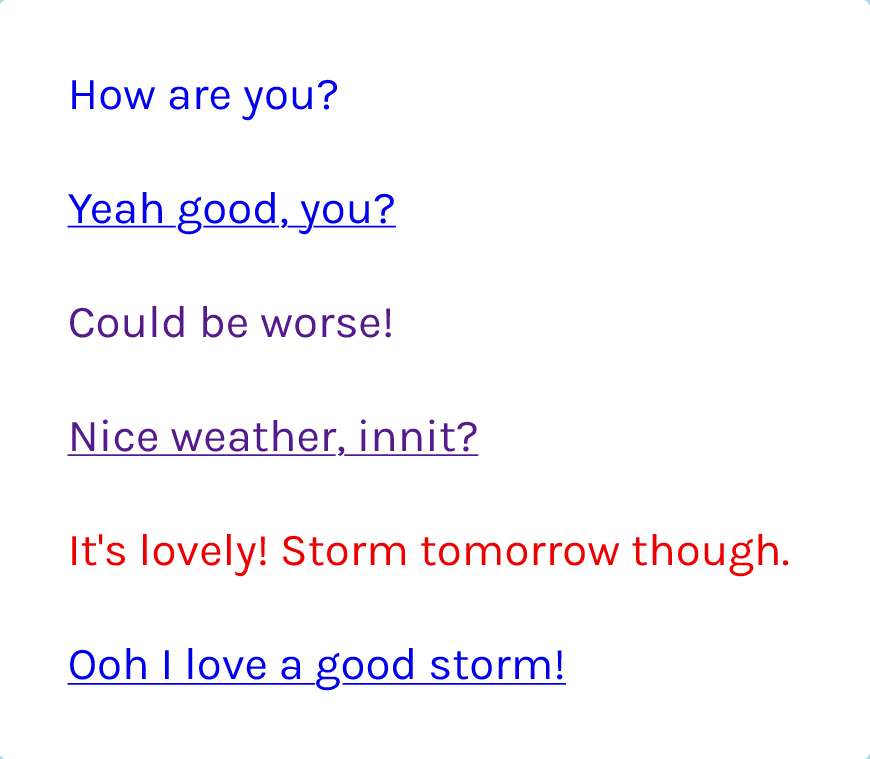
How are you?
Yeah good, you?
Could be worse!
Nice weather, innit?
One-Property Color Declaration
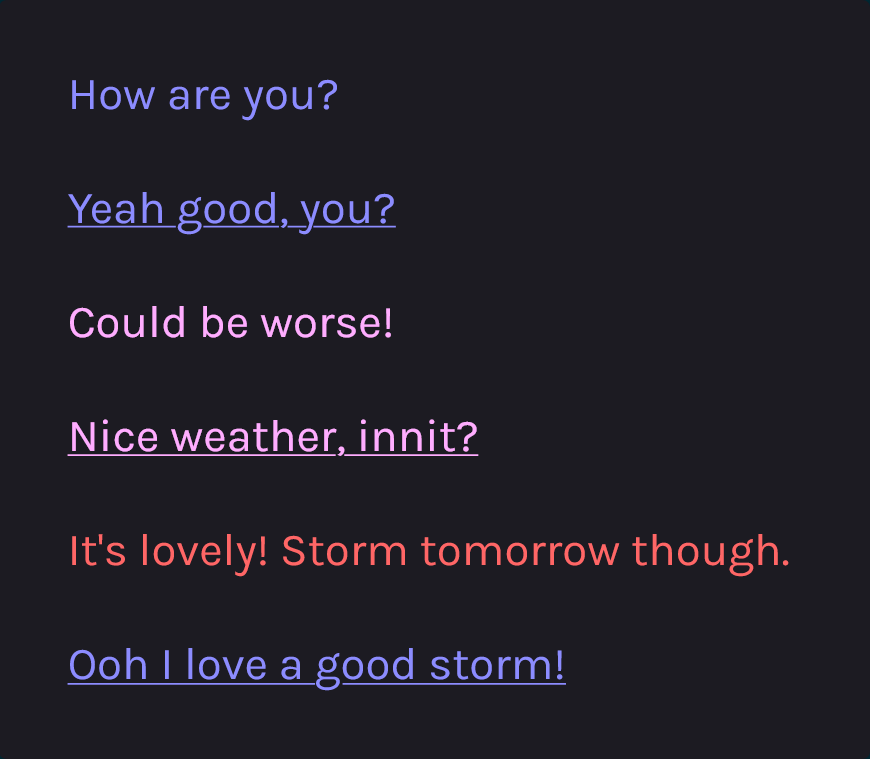
How are you?
Yeah good, you?
Could be worse!
Nice weather, innit?
It's lovely! Storm tomorrow.
Ooh I love a good storm!
Responsive color-mix() Palette
New contrast-color() Arrival!
Look at that, it's finally arrived across browsers!
This takes a colour, and returns which has the best contrast against it, black or white.
"Best" contrast here is a little tricky, so avoid mid tones.
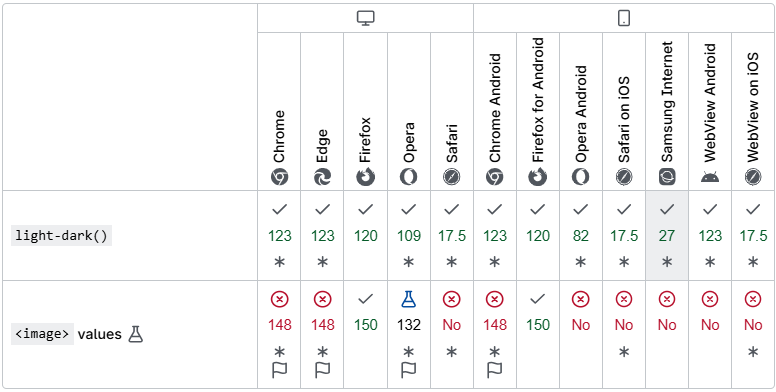
Using light-dark()
Instead of all that mixing we can just be specific 👈
Choose exact colours for dark and light mode.
But, only colors.
...for now 😏
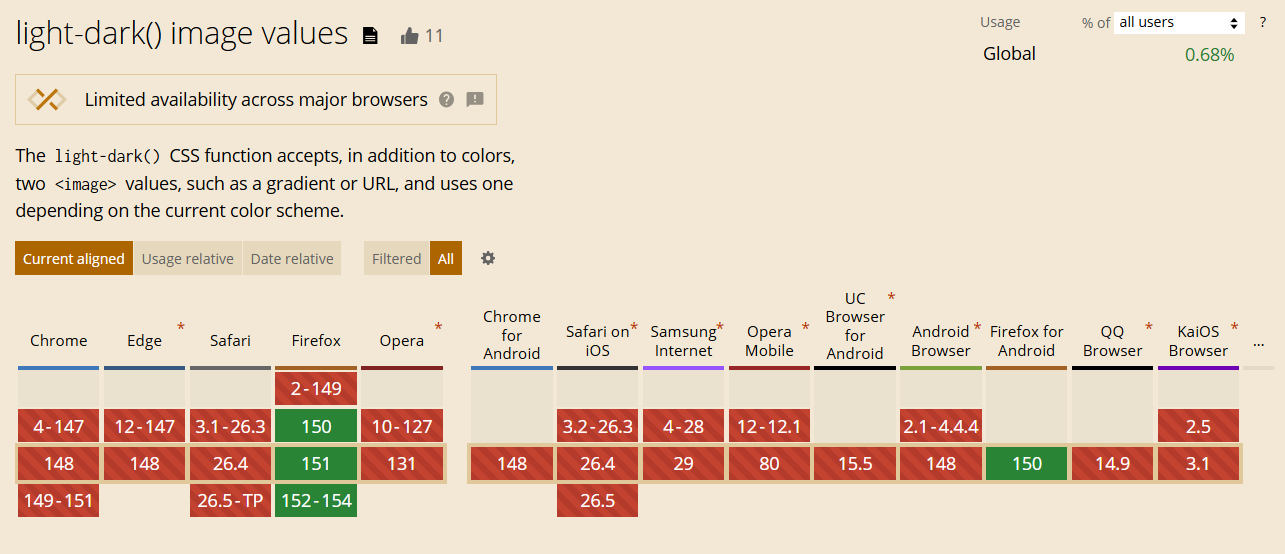
Coming Soon: Images in light-dark()
light-dark(
url("light-icon.png"),
url("dark-icon.png")
);
light-dark(
linear-gradient(135deg, ghostwhite 20%, tomato),
linear-gradient(45deg, darkslategray 20%, gold)
);
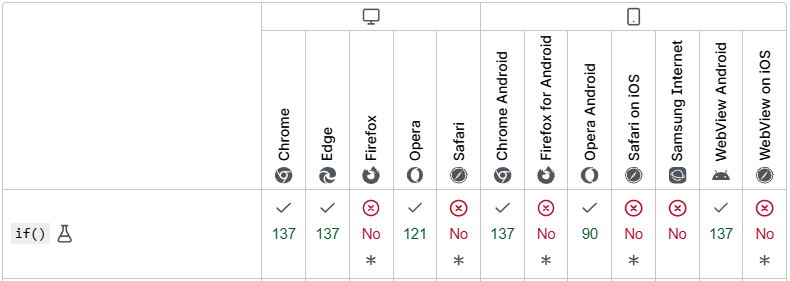
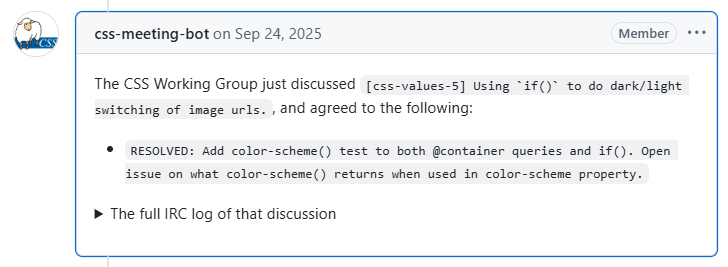
Coming Soon: if(), color-scheme()
#element {
  color-scheme: light dark;
  font-weight: if(color-scheme(dark): 300; else: 400);
}
Some text in light mode
Some text in dark mode
Some text in light mode
Some text in dark mode
Contrast Concerns
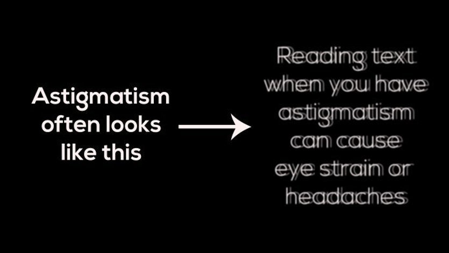
We worry about making a UI high-contrast enough.
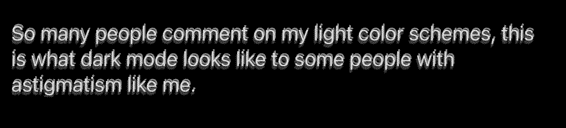
But a UI can have too much contrast, too.
Migraineurs can even suffer pain if the contrast is too high 😣
Neo-Brutalistic web design has become an issue for some of us.
Migraineurs and High Contrasts
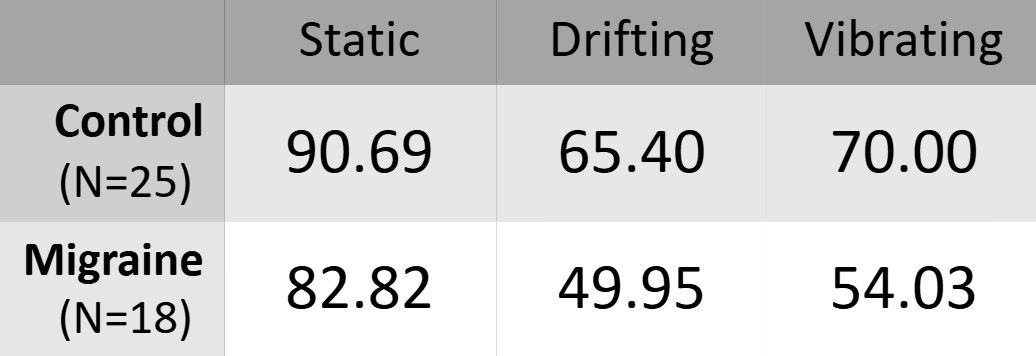
A study tested sufferers for their aversion to contrast based on the movement of a grating pattern.
I found it interesting that "Drifting" was the worst.
Stark, monochrome websites look cool. But they may also have similarities to a black and white grating pattern.
...And as we scroll, they drift.
Grating Demo
Warning! This may be uncomfortable.
If you get migraines or have epilepsy please look down.
Increasing & Decreasing Contrast
(Safe now!)
@media (prefers-contrast: more) {
:root {
background-color: Canvas;
color: CanvasText;
}
}
@media (prefers-contrast: less) {
:root {
filter: contrast(70%);
}
}
Issues: OS vs Website Settings
Neat! But how does a user specify low contrast in their OS?
Why in Windows do forced colors = prefers-contrast: more?
Some people like to keep their OS UI in light mode,
and view dark mode web pages, or vice-versa.
(Psst, browser vendors - 'prefers' toggles in toolbars, please 🙏)
"Honour the User" - John Alsopp 2025
Oh John, some days I would love to code less!
Manual Switching
To allow true choice, we currently need to roll our own switches.
When relying on prefers-color-scheme, this is a pain.
We have to override it with JavaScript and classes, and/or
double up the declaration of CSS color custom properties.
This is easier now! 🎉
Can we do it with CSS only? 🤔
Why the "Auto" Setting?
Including this saves you work!
Otherwise, you need to check which mode the user is in first - and detect the changes if their OS mode switches from light to dark.
Only then can you show the correct mode indicator, light or dark.
You can do this anyway, and skip auto if you like, I won't stop you!
But it's your choice to complicate matters 🤪
CSS-Only Limitations
You get limited pretty fast by avoiding JavaScript.
Using :has() is magical, but only per-page.
The preference doesn't get saved while browsing the site.
You can't simply use <buttons> if you prefer those!
So what JavaScript do we need?
Jeremy Keith's Maxim
"JavaScript should only do what only JavaScript can do."

Woo-hoo, Buttons!
OK great, so now we can use buttons, but this still only works per-page, and is lost when the page is reloaded ♻️
So we need to store the preference for the user.
For this we can use sessionStorage or localStorage.
sessionStorage lasts per visit to a domain. localStorage is kept between visits until the user clears their browsing data.
Show State in Buttons
The three buttons are neat, but what is the current mode? 🤔
It's not too difficult to set a class with JS on the 'active' button.
But instead let's use the existing aria-pressed attribute!
This is exactly what it's for, and has the benefit that a screen reader can also announce which option is currently active.
Using aria-pressed for Buttons
In Summary: Offer Choice
Use color-scheme: light dark; for a free dark mode
Experiment with color-mix() with Canvas & CanvasText
Use light-dark() to get specific within each mode
Honour your users' colour and contrast preferences
Experiment and play :)
From 2 Choices = 6 Options
more contrast
usual contrast
less contrast
light mode
Hi!
Hi!
Hi!
dark mode
Hi!
Hi!
Hi!